Travel Dates: Nov. 2025
베토벤 교향곡 9번: 클래식이 주는 연말 선물
A year-end Gift from Classical music
한 해를 마무리 하거나 새해를 맞이할 때, 클래식은 동기부여에 알맞은 선물처럼 느껴진다. 인류애를 찾아보기 힘든 요즘엔 “베토벤 교향곡 9번”은 조금이나마 화합과 그로인한 환희를 상상해볼 수 있는 음악인 것 같다. 베토벤이 살던 시기에도, 우리가 살고 있는 지금도 이런 위로가 필요했기에 이 음악이 여전히 울려 퍼지는 것 같다. 클래식은 영원하다라는 말이 이런 의미를 내포하는 것일수도 있겠다.
As the year draws to a close or a new one begins, classical music feels like the perfect gift for motivation and reflection. In times like these, when it’s hard to find traces of humanity around us, Beethoven’s Symphony No. 9 becomes a piece that lets us imagine harmony—and the joy that comes from it—even if just for a moment. Perhaps this music continues to resonate because people needed this kind of comfort back in Beethoven’s time, just as much as we do now. Maybe that’s what people mean when they say classical music is eternal.
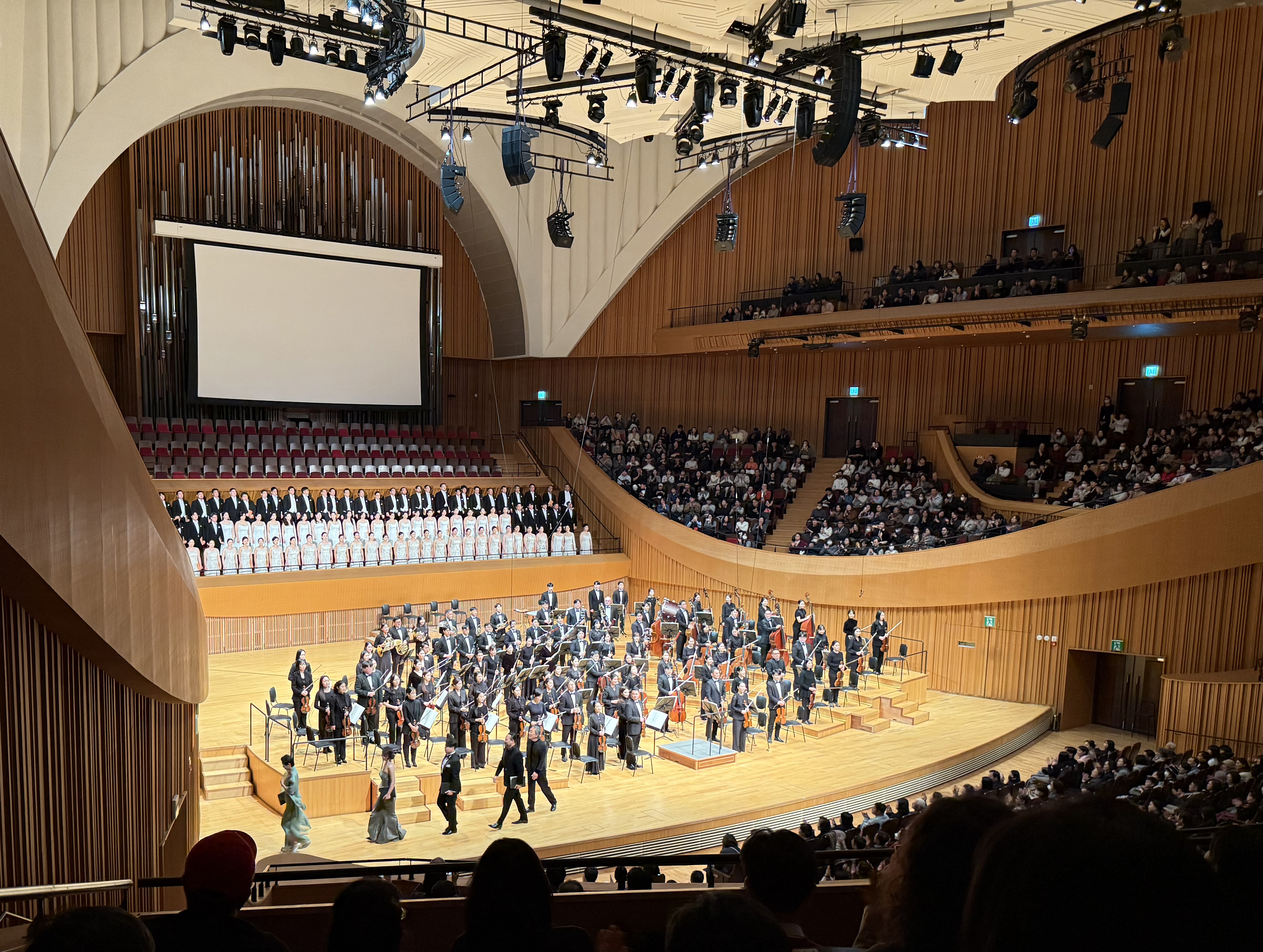
이번엔 올리버의 지인에게 받은 R석 티켓 덕분에 더욱 들뜬 기분이었다. 올리버는 지휘자 정명훈을 볼 수 있다는 것에 잔뜩 기대를 한 모양이었다. 1악장이 시작 하기도 전, 정명훈 등장에 가슴이 쿵쾅쿵쾅 뛰었다는 것을 보면 말이다. 난 그 보다, 정명훈 지휘자와 함께하는 이 곡은 어떤 느낌일까하는 궁금증이 컸었다. 내가 알던 교향곡이 이번엔 어떤 감정으로 다가올까 하는 궁금증 말이다. 아무튼 연말에 즐기는 클래식 공연은 유난히 감성을 더 자극하는 것 같다.
This time, I was even more excited thanks to the R-seat ticket I received from Oliver’s acquaintance. Oliver seemed thrilled at the thought of seeing Maestro Myung-Whun Chung in person. The way his heart was pounding even before the first movement began made that obvious. As for me, I was more curious about how this piece would feel under Chung’s baton—what kind of emotions it would stir, and how the Symphony No. 9 I thought I knew might come to me differently this time. Somehow, classical concerts feel especially touching at the end of the year.

지극히 비전공자 관점의 감상평:
1악장은 엄청난 에너지를 일에 쏟아부으며, 정신없이 일을 했던 시절이 떠올랐다. 2악장은 그 와중에서도 고통과 기쁨이 끊이없이 교차했던 순간들이 떠올랐다. 일을 하면서 뿌듯했던 결과물들이 떠오름과 동시에 그것들을 달성하기 위해 감내했던 고생들도 떠올랐다. 3악장에서는 그러했던 나의 과거를 초연하게 되돌아보는 듯한 감정을 느끼게 되었다. 지난 순간들을 제 삼자 입장에서 바라보는 기분이랄까. 좀 더 객관적으로 내 자신을 회고하는 기분이 들었다.
From the perspective of a complete non-expert:
The first movement brought back memories of when I poured all my energy into my work. The second movement reminded me of the moments when pain and joy were constantly intertwined—those proud achievements that came with equally heavy struggles. The third movement felt like looking back on all of that from a calm distance, as if I could finally view my past with a clear mind. It felt as if I were observing past moments from a third-person perspective, reflecting on myself with a clearer, more objective eye.
4악장에서는 귓가에 익숙한 멜로디가 마치 어린아이를 다루듯이 부드럽게 연주되기 시작했다. 특히, 첼로와 콘트라베이스가 저음에서부터 한겹 한겹 쌓아 올리며 변주가 되어가는 과정은 세상사가 다 그렇다며 나를 보듬어주는 것 같았다. 단조로운 선율 위에 관현악이 겹겹이 더해지며 합창과 만나 환희를 내뿜듯한 폭발적이게 변하는 순간은 마치, 다시 한번 기운내자며 손을 내밀며, 그럼에도 활기찬 이 세상에 함께 다시 일어서보자는 감정을 전해 주는 것 같았다.
And then came the fourth movement. The familiar melody began softly, almost like someone gently comforting a child. The way cellos and double basses built the music layer by layer from the depths made me feel as though the piece was quietly whispering,
“That’s how life is.”
The moment when the orchestra layered over the simple melody and erupted in a burst of joy seemed to reach out, as if saying,
“Let’s lift ourselves up once more”
and while at the same time conveying the feeling of standing up together in this lively world.
청력을 잃어가던 베토벤 자신에게 ‘위로’와 ‘그럼에도 불구하고’라는 동기부여를 준 곡일 수 있겠구나 라고 생각했다. 베토벤은 음악으로 표현했듯이, 나도 내 인생에 ‘위로’와 ‘그럼에도 불구하고’의 셀프 동기부여를 다시 해보자 한다. 환희의 송가처럼, 찬란하면서도 너무나 성실하게, 지나치게 진지하게 살았던 과거를 내 손에서 놓아주고, 이제는 불안과 답답함을 좀 더 담대하게 마주할 것이다. 그리고 거기서 자신감과 환희를 향해 한 걸음 더 나아갈 것이다.
I found myself thinking that this must have been a source of comfort and motivation—a sense of “nevertheless”—for Beethoven himself as he lost his hearing. Just as he expressed himself through music, I, too, want to reclaim my own sense of comfort and courage. Like Ode to Joy, I will let go of my brilliant yet overlay earnest past, and I will face my current fears and frustrations with greater boldness. From there, I will take another step forward toward confidence and joy.



Leave a comment